EVOLUTION OF FILM SCHOOL
Hands-on filmmaking courses teach how to operate equipment. For decades these courses relied on three staples, all film based--the Arri S camera, Nagra audio recorder, and Steenbeck editing flatbed.
This equipment is probably unfamiliar to those of you who started making movies in the digital age. It's interesting to take a closer look at these classics since this is the very equipment iconic directors like Martin Scorsese and George Lucas trained on.
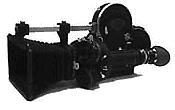
Arri S Camera
Arriflex stopped making the Arri S film camera in the 1970s. The camera was so ruggedly built that it was used in film schools and industry for over 30 years after Arriflex ended production. This is the camera that Robert Rodriguez used to shoot the low budget feature El Mariachi.
Arri S Classic Teaching CameraVirtually all film schools have made the shift to digital cameras. Some of the larger programs, NYU for instance, still teach film using the Arri S, but the future is clearly in electronic cinematography.
Although the Arri S is a very "fixable" camera, there are few technicians left that have the knowledge. Today, lenses and parts are scarce. NYU has the largest stockpile of parts in the world, having bought out Arriflex's inventory in the late 1990s.
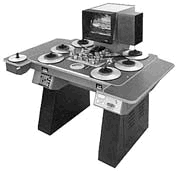
Steenbeck Editing FlatbedThe Steenbeck editing flatbed was considered state-of-the-art until the late 1980s. It is designed like a horizontal projector with separate drives for picture and sound.
The machine shown below has one drive for picture and two for sound. It's hard to believe from the perspective of our digital world, but the tracks were physically cut and assembled using splicing tape.
The Steenbeck was the first piece of film based equipment to succumb to the digital revolution. Now, virtually all professional movies are cut on computer based systems like Avid and Final Cut Pro.
Steenbeck Editing Machine
First Casualty of the Digital RevolutionNagra Audio Recorder
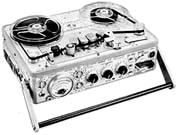
For many years, the Nagra audio recorder was the industry standard for film sound. It was gradually displaced by digital recorders.
Digital recorders came in the form of digital tape recorders (a.k.a. DAT recorders) followed by computer based card recorders. Removable card recorders are the standard today.
The Nagra was a beautifully built, precision instrument and the most difficult of the film era tools to let go. Many sound mixers still own one.
Nagra 4.2 Audio RecorderChanging Technology
Even digital equipment is not immune to change. Currently, SD (standard-definition) video equipment is being replaced by HD (high-definition), requiring another round of expensive upgrades by film schools.
Top universities have formalized plans to deal with evolving technology. On the other hand, smaller institutes may not have the resources. When considering a prospective film school, research not only their curriculum but also the equipment they use.
Film era equipment was complex and difficult to learn, not to mention expensive. This made formal training (i.e., film school) a necessity. Digital equipment, however, is relatively easy to learn and far less expensive. There are now viable alternatives to gaining hands-on experience without going to film school.
Aspiring filmmakers often shoot and edit short movies just for the sake of learning. Broadcast quality equipment has dropped so far in price that many of them buy their own gear. To learn high-end equipment, cheap rentals are a great solution.
Rental houses usually have a one day charge for weekend rentals. It's a secret film students have known about for years. If your rental house is charging three days for a weekend, ask them for a one day charge. Chances are they'll give it to you, especially on a slow weekend.
-Lou LaVolpe
Copyright © Film School Online!